Glass Wool vs Rock Wool for HVAC, Steel Buildings, and Facades: A Contractor Selection Guide
Glass wool and rock wool are both mineral wool insulation materials, but B2B buyers select them for different reasons. The best choice depends on application, fire requirement, temperature, acoustic target, facing, installation method, and budget.
1. HVAC ducts and air conditioning systems
For HVAC duct insulation, glass wool is often selected because it is lightweight, easy to cut, and available with aluminum foil or other facings. It can provide thermal and acoustic performance for ducts and air conditioning systems.
Relevant product options include Glass Wool Air Conditioning Board, Faced Glass Wool Products, and HVAC Duct & Air Conditioning Insulation.
2. Steel structure and metal buildings
Steel structure buildings often need roof and wall insulation that is light, fast to install, and suitable for large-area coverage. Glass wool roll or blanket is commonly considered for this type of application. Where stronger fire performance or higher rigidity is required, rock wool board may be selected.
3. Facades and exterior walls
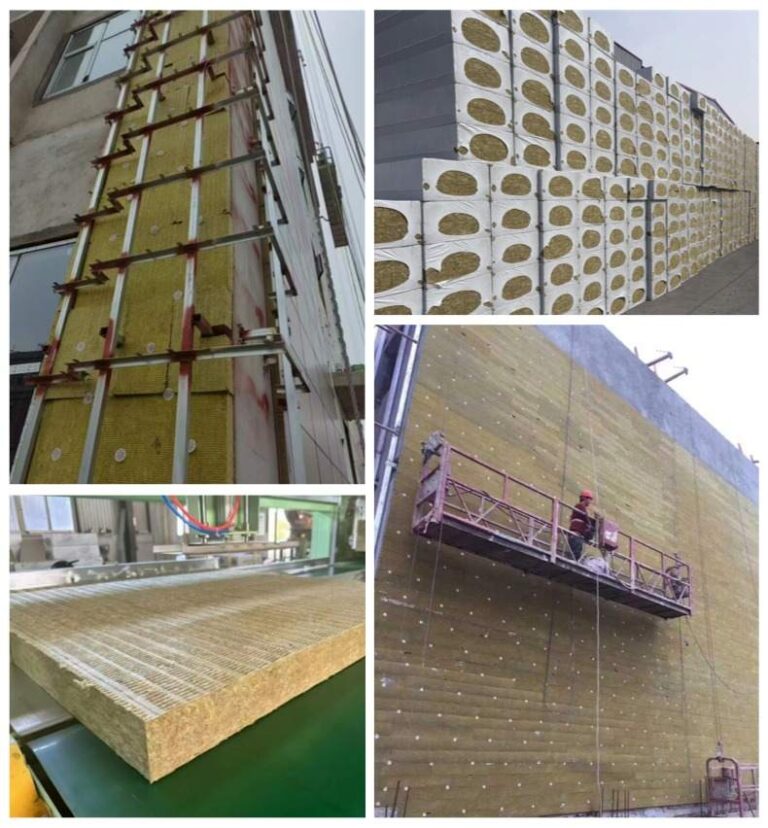
Rock wool is frequently used in exterior wall and facade systems because of its non-combustible character and dimensional stability. Buyers should confirm density, compressive performance, board size, and system requirements before ordering.
4. Acoustic walls and partitions
Both glass wool and rock wool can support acoustic absorption. The final selection depends on density, cavity depth, facing, fire requirement, and installation method. For lightweight interior acoustic applications, glass wool board or batts may be practical. For fire-rated wall systems, rock wool board may be preferred.
5. Industrial and high-temperature systems
Industrial pipes, tanks, boilers, and high-temperature equipment usually require careful temperature review. Rock wool pipe insulation and rock wool blankets are often considered for these systems. High-temperature glass wool may be suitable for specific use cases, but the project specification should guide the choice.
Quick comparison
- Choose glass wool when lightweight handling, roll format, HVAC duct use, and acoustic absorption are priorities.
- Choose rock wool when non-combustibility, facade use, pipe insulation, higher temperature stability, or rigidity is more important.
- Confirm facing and moisture control for cold, humid, or exposed systems.
FAQ
Is one material always better than the other?
No. Glass wool and rock wool solve different project problems. The right material depends on the application and specification.
Can a project use both glass wool and rock wool?
Yes. A building or industrial project may use glass wool in HVAC or roof areas and rock wool in facades, fire-safe walls, or pipe systems.