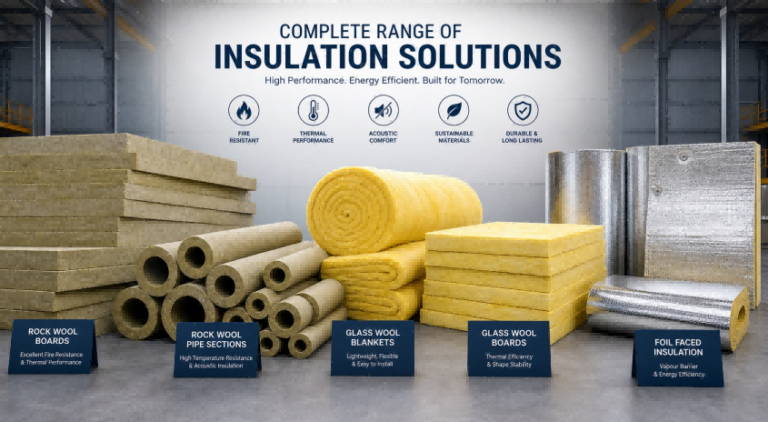
GEO for B2B Insulation Websites: Preparing Glass Wool and Rock Wool Content for AI Search
Search is changing. Buyers are no longer finding suppliers only through traditional blue-link search results. More purchasing research now begins inside AI-powered search experiences, answer engines, and large language model tools. For B2B insulation manufacturers, this creates a new requirement: your website must be easy for both search engines and AI systems to understand.
This is where GEO, or Generative Engine Optimization, becomes important. GEO does not replace SEO. Instead, it adds clearer entity information, structured product data, useful technical content, and AI-friendly discovery files so that search engines and answer engines can understand who you are, what you supply, and which applications your products serve.
What GEO Means for an Insulation Manufacturer
For a glass wool and rock wool insulation supplier, GEO is not about writing vague marketing copy. It is about making the website technically clear and commercially useful. AI systems need direct answers to questions such as:
- What company owns the website?
- What product categories are supplied?
- Which products are suitable for building, HVAC, industrial pipe, tank, roof, wall, and acoustic insulation?
- What specifications can be customized?
- How can a buyer request a quotation?
When these signals are missing, AI tools may misunderstand the business, skip the website, or rely on incomplete third-party information. When the signals are clear, the site has a better chance of being cited, summarized, or recommended in AI-assisted research workflows.
1. Keep Robots.txt Open for Search and AI Discovery
The first step is simple but often overlooked: make sure important crawlers are not blocked by robots.txt. A B2B website should allow search engines to crawl product pages, category pages, application pages, FAQ content, and contact information.
For Yinliya, the robots.txt file points crawlers to the XML sitemap and allows access to public website content while still protecting admin and WooCommerce system paths. This gives search engines and AI discovery systems a clean route to the pages that matter.
2. Add an llms.txt File for AI Search Context
An llms.txt file is a lightweight text file that summarizes the website for AI systems. It can list the company profile, product categories, important pages, application pages, and quotation instructions in a format that is easy to parse.
For a B2B insulation website, a useful llms.txt should include:
- Company name and website URL
- Contact email for quotations
- Main product categories such as glass wool and rock wool insulation
- Core product URLs
- Application pages for HVAC, steel structure, industrial pipe, wall, roof, and acoustic insulation
- Basic quotation instructions such as product name, thickness, density, facing, dimensions, and quantity
This does not guarantee AI visibility by itself, but it gives AI systems a clean reference point for understanding the website.
3. Use Structured Data for Products, Organization, FAQ, and Applications
Structured data helps search engines and AI tools read important information without guessing from page layout. For an insulation manufacturer, several schema types are especially useful:
- Organization: identifies the company, brand, contact point, and areas of expertise.
- Product: describes individual insulation products such as rock wool pipe insulation, glass wool board, and faced glass wool.
- ItemList: helps crawlers understand the full product catalog.
- FAQPage: organizes common questions about MOQ, trade terms, OEM packaging, certificates, samples, and lead time.
- Service: connects application pages with recommended products.
For example, a page about industrial pipe, tank, and equipment insulation should connect the application to relevant products such as rock wool pipe insulation, rock wool blanket, and high temperature glass wool. This helps both human buyers and AI systems understand which product fits which use case.
4. Build Application Pages, Not Only Product Pages
Many B2B buyers search by application before they search by product name. They may look for ?HVAC duct insulation,? ?steel structure building insulation,? ?industrial pipe insulation,? or ?wall and roof acoustic insulation.? If the website only has product pages, it may miss these search paths.
Application pages are useful because they connect buyer problems with product choices. A strong application page should explain:
- The project type
- Common insulation requirements
- Recommended products
- Specification points to confirm before quotation
- A clear contact path for EXW pricing or samples
This approach improves traditional SEO while also giving AI systems a clearer knowledge map of the website.
5. Keep Product Descriptions Technical and Direct
AI systems prefer clear, factual content. Product pages should include more than a short marketing paragraph. For insulation products, each page should include:
- Short product overview
- Key features
- Applications
- Technical specifications
- Customization options
- Packaging and loading information
- Quotation guidance
For example, a rock wool pipe insulation page should clearly state that it is a pre-formed pipe section for industrial pipelines, HVAC piping, steam systems, and equipment insulation. It should also list customizable items such as density, thickness, inner diameter, facing, and packaging.
6. Avoid Overclaiming
GEO is not about exaggeration. AI systems and buyers both value trust. Avoid unsupported claims such as unrealistic country counts, unverified energy-saving percentages, or certification claims that cannot be supported by documents.
Instead, use language that is accurate and commercially useful: ?available on request,? ?customizable according to project requirements,? or ?subject to selected grade and test method.? This keeps the content credible and reduces the risk of misleading buyers.
7. Make the Quotation Path Clear
For B2B export websites, the final goal is usually not online checkout. It is a qualified inquiry. Every major product and application page should guide the buyer to send the information needed for quotation:
- Product name
- Thickness
- Density
- Facing
- Dimensions
- Quantity
- Operating temperature if relevant
- Packaging requirement
This helps the sales team reply faster and helps AI systems understand how procurement works on the website.
Conclusion
For glass wool and rock wool insulation manufacturers, GEO is a practical extension of SEO. The goal is to make the website understandable, credible, and easy to cite. A strong GEO foundation includes open crawl access, a helpful llms.txt, structured data, complete product pages, application pages, FAQ content, and clear quotation instructions.
As AI-powered search becomes more common in B2B sourcing, websites with clear technical content and structured entity signals will be better prepared for the next generation of search visibility.